
Living abroad field guide

Build a routine that can cross borders.

For missionaries, students, expats, and long-term travelers: start with travel medicine and the basics. Treat supplements as optional support—not protection from infection and not a substitute for care.

Published August 31, 2026 Last reviewed August 31, 2026 By Meridian editorial team
00 · Answer first

What matters most?

Before living abroad, arrange destination-specific medical advice, required vaccines and prescriptions, safe food and water habits, oral rehydration supplies, and a realistic way to refill medications. A supplement can be part of a routine, but it cannot prevent or treat travelers’ diarrhea, parasites, or infection.
01 · Before departure

Start with the destination, not the supplement aisle.

A pre-travel clinician can review your itinerary, health history, vaccines, prescriptions, and a plan for common problems. The CDC recommends destination-specific preparation because needs vary by country, season, length of stay, and access to care.

Read the CDC pre-travel consultation guidance →

02 · Packing list

Pack the unglamorous essentials first.

  • Required prescriptions in original packaging, plus copies of the prescriptions.
  • Destination-specific vaccines and any clinician-recommended preventive medicines.
  • Oral rehydration salts, hand sanitizer, and a basic thermometer.
  • A written plan for where to seek medical care and how to replace medications.
  • Copies or photos of every medication and supplement label you use.

Check airline, customs, mission, school, and destination rules before packing any medication or supplement. Rules can vary, and the label should stay with the product.

See the CDC travel health kit guidance →

03 · On the ground

Keep the daily routine simple.

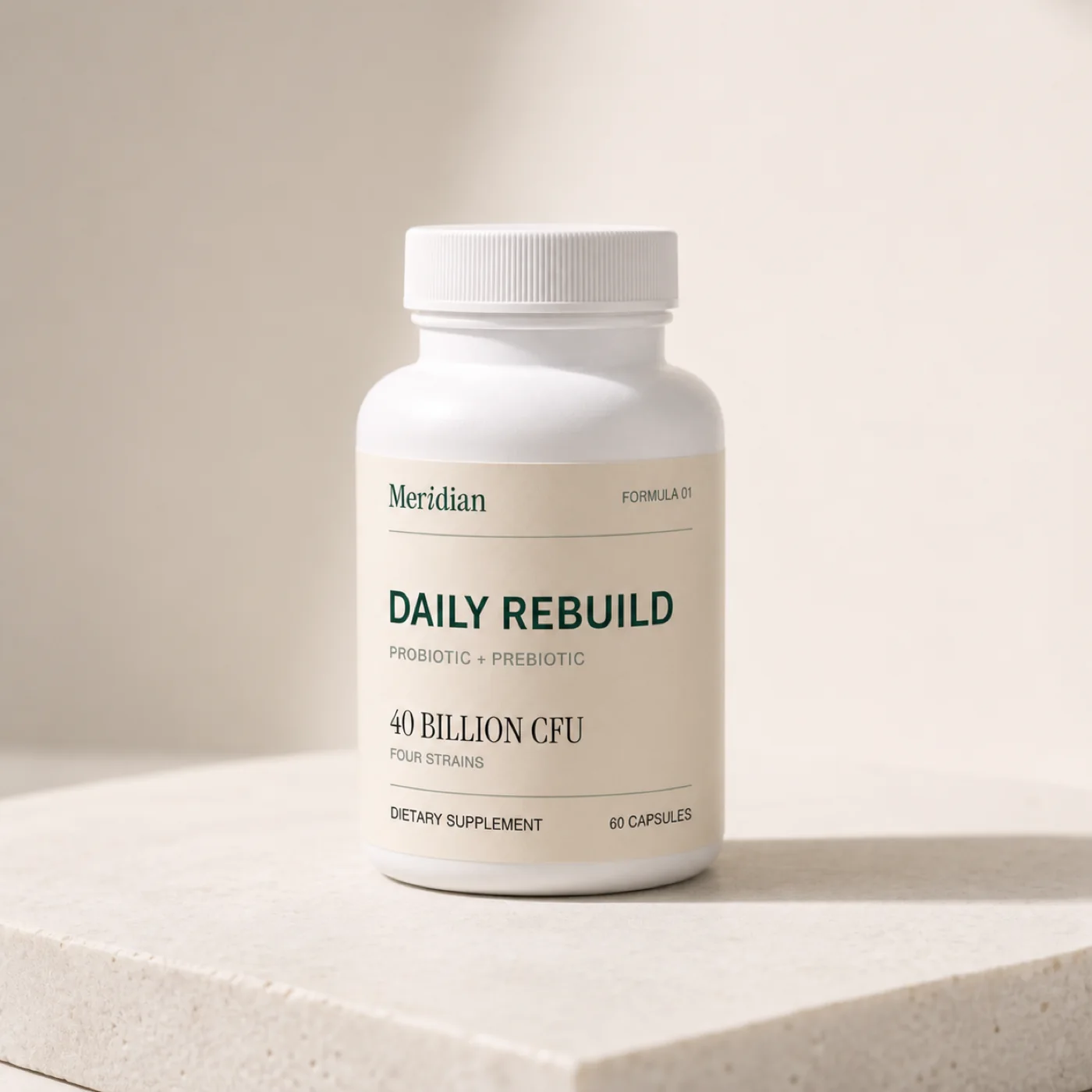
Prioritize regular meals, safe water, hydration, sleep, and access to care. If a qualified clinician says a probiotic is appropriate for you, Daily Rebuild is labeled as a two-capsule daily routine. Follow the label and local import rules.

The CDC says evidence is insufficient to recommend probiotics for preventing travelers’ diarrhea. NCCIH also notes that probiotic effects vary by product and strain, and that safety data are limited for some groups. Meridian does not position Daily Rebuild as prevention or treatment for travel-related illness.

04 · After return

Do not guess your way through persistent symptoms.

Restart familiar food, hydration, sleep, and healthcare routines gradually. If you need care, tell the clinician where you traveled, how long you were away, what you ate or drank, whether you became ill, and which medications or supplements you used.

The CDC defines post-travel diarrhea lasting 14 days or longer as persistent. Severe symptoms, dehydration, high fever, bloody diarrhea, or symptoms that persist or worsen need professional evaluation rather than more supplements.

Read the CDC post-travel diarrhea guidance →

Direct answers

Common questions about living abroad and coming home.

What should I take while living abroad?

Begin with a destination-specific pre-travel visit, required vaccines and prescriptions, a plan for safe food and water, oral rehydration supplies, and copies of medication and supplement labels. Supplements are optional; they are not substitutes for travel medicine.

Can I take Daily Rebuild during international travel?

Daily Rebuild is labeled as a two-capsule daily routine. It does not prevent or treat travelers’ diarrhea, parasites, or infection. The CDC says evidence is insufficient to recommend probiotics for preventing travelers’ diarrhea. Ask a qualified clinician whether it is appropriate for you, especially if you are pregnant, immunocompromised, managing a medical condition, or taking medication.

What should I do after returning home from a mission or long stay abroad?

Restart regular meals, hydration, sleep, and healthcare routines gradually. Seek professional evaluation for severe symptoms, dehydration, high fever, bloody diarrhea, or symptoms that persist or worsen; tell the clinician where you traveled. CDC defines post-travel diarrhea lasting 14 days or longer as persistent.

Sources

Evidence before advice.

CDC Yellow Book: Travelers’ Diarrhea. Prevention, hydration, symptom severity, and the evidence boundary for probiotics. Read the source

CDC Yellow Book: Post-Travel Diarrhea. Evaluation of gastrointestinal symptoms after international travel. Read the source

NIH National Center for Complementary and Integrative Health: Probiotics. Current evidence and safety considerations. Read the source

Sources reviewed August 31, 2026. This guide is educational and is not individualized medical advice.

Optional next step

Review the routine without the promises.

Want the full sequence? See where Meridian’s three formats fit beside food, hydration, sleep, and appropriate medical care.

Want the product details? Read the disclosed label, ingredients, serving directions, and current documentation before deciding.